Whitsundays Boat Tour
See tours

Month by month

Best time to visit the Whitsundays for a boat tour, month by month

The best time to visit the Whitsundays for a boat tour is the dry season from May to October: steady trade winds for the sailing yachts, the clearest water of the year over the reef, humpback whales passing through from July to September, and warm days that stay under thirty degrees. Every Whitsundays boat tour on this site runs all year, the sea is warm enough to swim in every month, and the wet season from December to March has its own case: fewer boats at the beach and the greenest islands. Our top pick, two nights under sail at $372, is the same trip in every season; what changes is the wind and the wardrobe. Whichever month you choose, book a few weeks ahead.

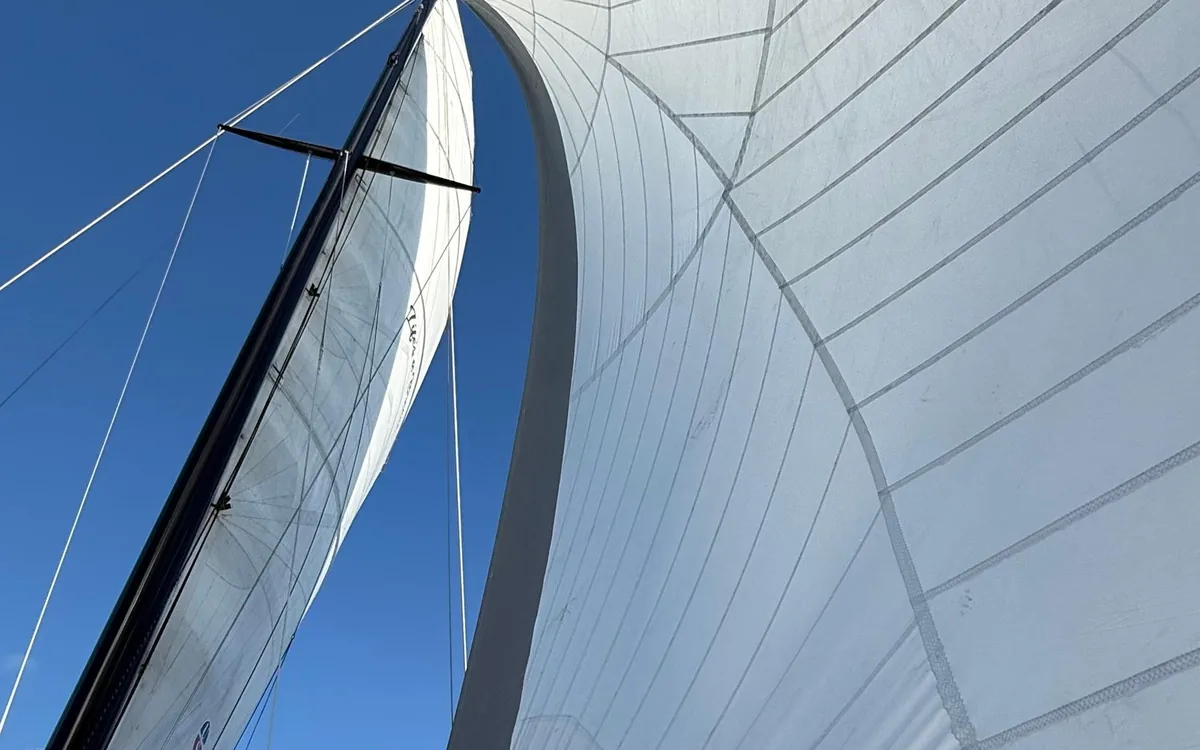
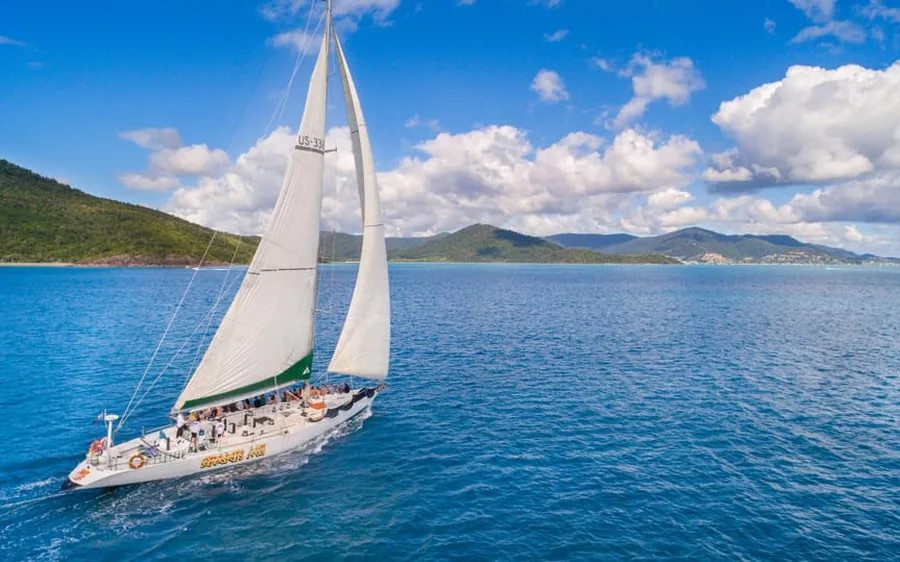
A white sail against a blue sky with cumulus cloud over the Whitsundays

Quick answer

Best months: June to September, for clear water, trade winds, whales and mild days. Good months: April, May and October, quieter and warmer, with the water still clear. Warmest and wettest: December to March, with short afternoon showers, thirty-degree days and the islands at their greenest. Stinger suits are supplied on every boat from October to May, and most people wear them all year for the sun. Book our top pick at $372 a few weeks ahead in any month, and longer around Australian school holidays, when the overnight yachts fill first.

The Whitsundays year, at a glance

Best window
June – Septemberdry, clear, trade winds, whales
Water temperature
23 – 29 °Cswimmable every month
Air temperature
24 – 31 °Cwinter days in the mid-twenties
Trade winds
May – Octoberthe sailing season
Whales
July – Septemberhumpbacks in the channels
Stinger suits supplied
October – Mayand available all year
Wettest months
January – Marchshort afternoon showers
Busiest weeks
Australian school holidaysand late December
Our top pick
$372two nights, all meals, 560 reviews
Book ahead
a few weeksin every month

The four seasons on the water

When to visit the Whitsundays, season by season

Every season gets you to Whitehaven Beach. The difference is what the wind and the water are doing when you arrive.

Jun – Aug

Winter: the clearest water and the whales

Dry, warm days in the mid-twenties, cool evenings on deck, trade winds that fill the sails every afternoon, and humpback whales in the channels between the islands. The water is at its clearest over the reef. The busiest season for the overnight boats, and the best.

Sep – Nov

Spring: warming water and long days

The wind eases through September and October, the water warms past twenty-six degrees, and the days lengthen. The last of the whales leave in September. Stinger suits come out in October. A quieter shoulder with much of winter’s clarity.

Dec – Feb

Summer: warm, green and showery

Thirty-degree days, the warmest sea of the year, and short afternoon showers that clear quickly. The islands are at their greenest and the beach is at its emptiest outside the Christmas weeks. Stinger suits on every boat, and the fewest boats at the lookout.

Mar – May

Autumn: the water settles

The showers thin out through March, the humidity drops, and by late April the trade winds return and the water clears. May is the quiet start of the dry season and one of the best-value months on the water.

Winter

June to September: the months the skippers would choose

Trade winds, clear water, whales, and the deck at sunset in a jumper.

If you can pick a month for a Whitsundays boat tour, pick one of these four. The south-east trade wind blows most afternoons at fifteen to twenty knots, which is exactly what a sailing yacht wants, and the air is dry, so the water over the fringing reef at Hook Island is at its clearest. Days sit in the mid-twenties, evenings on deck ask for a jumper, and the sea stays at twenty-three or twenty-four degrees, warm enough for an hour in the water.

From July to September humpback whales pass through the islands on their way north and back, and the overnight yachts see them from the deck in the channels. It is the one season when the sail between anchorages is as good as the anchorages.

It is also the busiest season, and the Australian winter school holidays fall in July. Our top pick at $372 carries small groups and fills weeks ahead; book it as soon as your dates are fixed.

Spring

September to November: the quiet shoulder

Warming water, longer days, and the lookout with fewer people on it.

The wind eases through spring and the water warms past twenty-six degrees by November. The days get longer, the whales are gone by the end of September, and the water keeps most of winter’s clarity until the first summer showers. Stinger suits go on from October on every boat, which most people find they want anyway for the sun.

Outside the September school holidays it is a quiet month at the beach, and the day cruises from $170 have the lookout to themselves more often. A good season for people who want the sailing without the winter crowds, and for the scenic flights, which have calmer air as the wind drops.

Book direct

Four boats for four seasons

Two nights under sail in winter, the eco-cruise in summer, the flight in the calm shoulders, and a night on board in any of them.

A sailing yacht under full sail on the blue water of the Whitsundays
Our top pick560 reviews
2 nights

Airlie Beach: 2-Night Whitsundays Sailing Trip with Meals

4.7 · 560 reviews

  • Three days, snorkelling reefs and Whitehaven Beach
  • Freshly prepared meals on board
  • Stargazing at anchor
  • Free cancellation
$372$7.75 / hour
Check availability
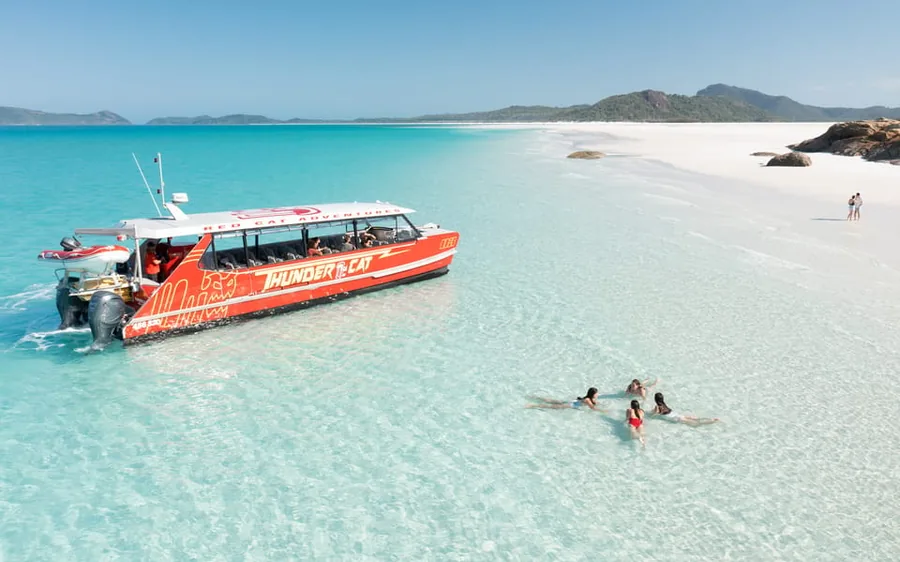
A red catamaran moored off Whitehaven Beach with swimmers in the shallows
3,185 reviewsBuffet lunch
8 h

Airlie Beach: Whitehaven Full-Day Eco-Cruise with Buffet

4.8 · 3,185 reviews

  • Eight hours, the fastest catamaran in the area
  • Best snorkelling locations
  • Likely to sell out
  • Free cancellation
$178$22.25 / hour
Check availability
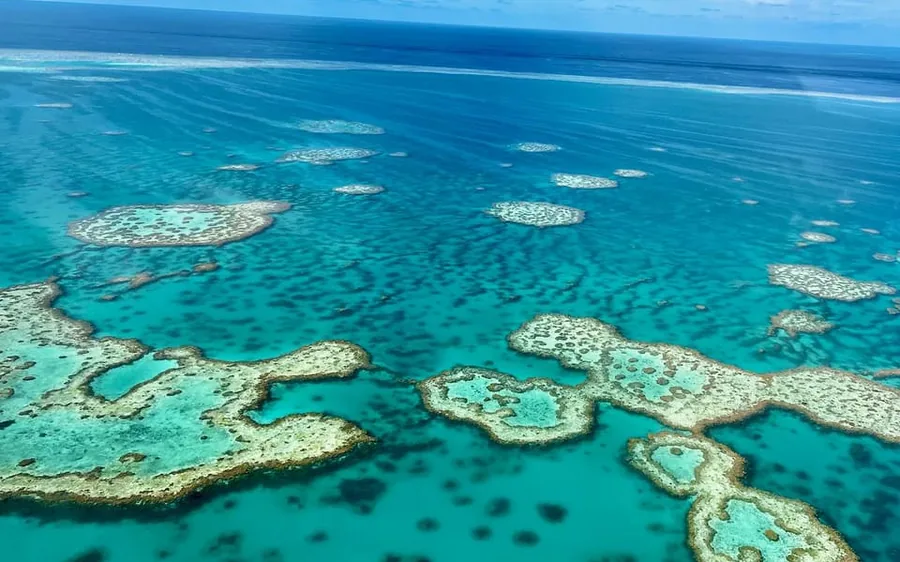
The Great Barrier Reef seen from the window of a light aircraft
2,286 reviewsHeart Reef
70 min

Airlie Beach: Whitsundays & Great Barrier Reef Scenic Flight

4.8 · 2,286 reviews

  • One hours 10 minutes, Whitehaven Beach, Hill Inlet and Heart Reef
  • Transfer from Airlie Beach
  • Likely to sell out
  • Free cancellation
$213$182.57 / hour
Check availability
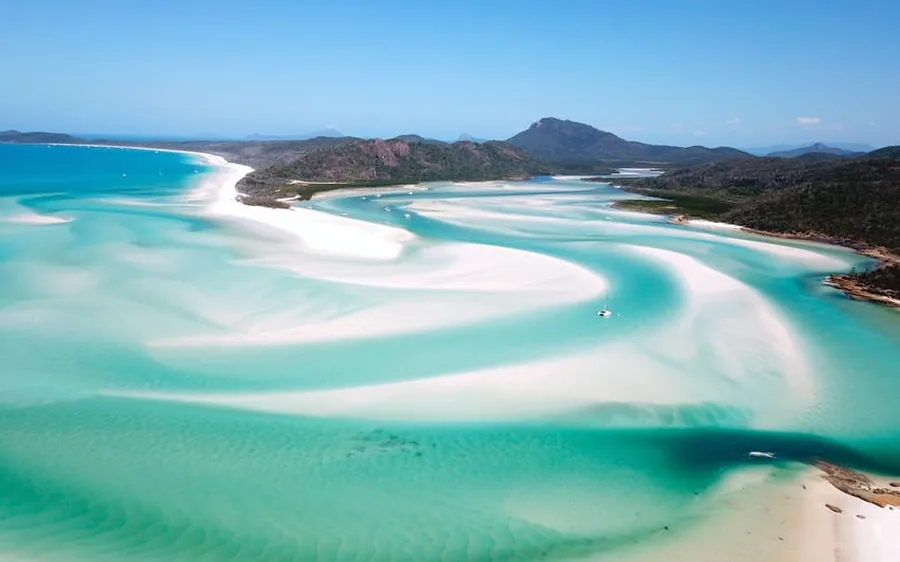
The swirling white sand and turquoise water of Hill Inlet from the air
540 reviews2 days, 1 night
1 night

Whitsundays: Snorkel, Sailing, Whitehaven Beach 2 Days, 1 Night

4.5 · 540 reviews

  • Two days, an overnight on a racing yacht
  • Whitehaven Beach and Hill Inlet
  • Likely to sell out
  • Free cancellation
$307$10.23 / hour
Check availability

Summer

December to March: warm, green and showery

The warmest water, the greenest islands, and the emptiest beach.

Summer in the Whitsundays is thirty degrees, humid, and the warmest sea of the year at twenty-eight or twenty-nine. Showers come in the afternoon, usually short and heavy, and clear to blue sky within the hour. The islands turn a deep green, the waterfalls on the mainland run, and outside the Christmas weeks the beach is quieter than at any other time.

Every boat supplies a stinger suit, and the crew asks you to wear it in the water; it is thin, it keeps the sun off, and after the first swim nobody notices it. The day cruises with shade and a buffet, like the eco-cruise at $178, are the comfortable summer answer; the overnight yachts run all summer and the warm nights are the ones people sleep on deck.

The reef is warmest and the fish are most active. If the postcard version of the Whitsundays is the white sand and the turquoise water, summer delivers it with the fewest other boats in the frame.
Autumn

April and May: the water settles and the value starts

Winter water, spring crowds.

The showers thin out through March, and by the middle of April the humidity has dropped, the trade winds are back and the water over the reef is clearing. May is the quiet start of the dry season, before the winter school holidays, and one of the best-value months on the water: winter conditions, spring crowds.

Stinger suits are still supplied until the end of May, and the sea is still warm at twenty-five or twenty-six degrees. It is the month the operators themselves take their holidays before the season, which tells you something about how good it is.

What changes with the month

Five things the calendar decides

And one thing it does not: the sand at Whitehaven is the same in every one of them.

  • The wind

    Trade winds from May to October make the sailing; the yachts heel and move. In summer the wind is lighter and the yachts motor more between anchorages.

  • The water

    Clearest from June to September, warmest from December to March. It is swimmable every month, and a stinger suit is supplied from October to May.

  • The wildlife

    Humpback whales from July to September. Turtles over the fringing reef in every month. The reef fish are most active in the warm water.

  • The crowds

    Winter is the busiest, and Australian school holidays in April, July, September and December fill the overnight boats weeks ahead. Book a few weeks ahead in every month.

  • The evenings

    A jumper on deck from May to September; warm enough to sleep on deck from November to March.

Booking by season

How far ahead, and which boat

The same trip in every month; the boat you pick changes with the weather.

  • June to September

    Our top pick at $372 for the sailing, the whales and the clear reef. Book a few weeks ahead, and longer for the July school holidays.

  • October and November

    The scenic flight at $213 in the calmer air, and the lookout at its quietest on the day cruises.

  • December to March

    The eco-cruise at $178 for shade and a buffet, or a night on board at $307 with the deck to sleep on. Book the Christmas fortnight well ahead.

  • April and May

    Any of them. Winter water, spring crowds, and the operators at their freshest.

Two nights under sail, every meal on board, and the season that suits you: 560 reviews at 4.7.

Check dates for our top pick

Common questions

Questions about when to go

What is the best time to visit the Whitsundays?

June to September for clear water, trade winds, whales and mild days. April, May, October and November are quieter shoulders with most of the same conditions.

When is stinger season in the Whitsundays?

October to May. Every boat on this site supplies a stinger suit in those months, and most people wear one all year for the sun.

Can you swim in the Whitsundays in winter?

Yes. The sea stays at twenty-three or twenty-four degrees in July and August, and the water over the reef is at its clearest.

When can you see whales?

July to September, when humpbacks pass through the channels between the islands. The overnight yachts see them from the deck.

Is the wet season worth it?

For the warmest water, the greenest islands and the emptiest beach, yes. Showers are short and the boats run every day.

How far ahead should I book?

A few weeks in every month. The overnight boats carry twelve to thirty people and fill first, especially in Australian school holidays and late December.

Which month is cheapest?

Fares barely move through the year. What changes is availability, so the shoulder months give you the widest choice of dates.

In short

Best time to visit the Whitsundays: the one-paragraph answer

Winter for the water, the shoulders for the quiet, summer for the warmth.

Go between June and September for the Whitsundays at their best on the water: trade winds, clear reef, whales, and cool evenings on deck. Go in April, May, October or November for most of that with fewer people. Go in summer for the warmest sea and the emptiest beach and wear the stinger suit. In every month, book our top pick at $372 a few weeks ahead, because the boats are small and the beach is the same in all of them.

Go deeper

More on the Whitsundays

Airlie Beach: 2-Night Whitsundays Sailing Trip with Meals

4.7 · 560 reviews · Free cancellation 24 h

$372our top pick Check dates