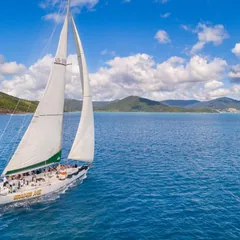
Airlie Beach: Snorkel, Hill Inlet Lookout & Whitehaven Beach
★ 4.8 · 2,400 reviews
- Six and a half hours, a rafting ride over the ocean
- Beach, snorkel and bushwalk
- Likely to sell out
- Free cancellation
The reef
The Great Barrier Reef from Airlie Beach comes in two kinds, and the price of a Whitsundays boat tour depends on which one you mean. The fringing reef around Hook Island and Langford Island is an hour from the marina, and every snorkelling day on this page reaches it from $170. The outer reef at Hardy Reef is three hours east, with a pontoon, a semi-submarine and the clearest water in the region, and three listings go there from $234. This page explains the difference, what you see in the water at each, and which Whitsundays great barrier reef snorkeling day to book.

Quick answer
Yes, you can see the Great Barrier Reef from Airlie Beach, and most people see it without going to the outer reef at all. The coral at Blue Pearl Bay, Mantaray Bay and Langford Island is fringing reef of the same system, an hour from the marina, with turtles, parrotfish and a resident Maori wrasse, and the raft boat at $177 snorkels two of those sites with 2,400 reviews. The outer reef is three hours out and clearer: the pontoon day at $234 adds a semi-submarine and lunch on the platform. Our top pick at $372 snorkels the fringing reef twice over two nights.
Two reefs
Same system, calmer water inshore, clearer water out.
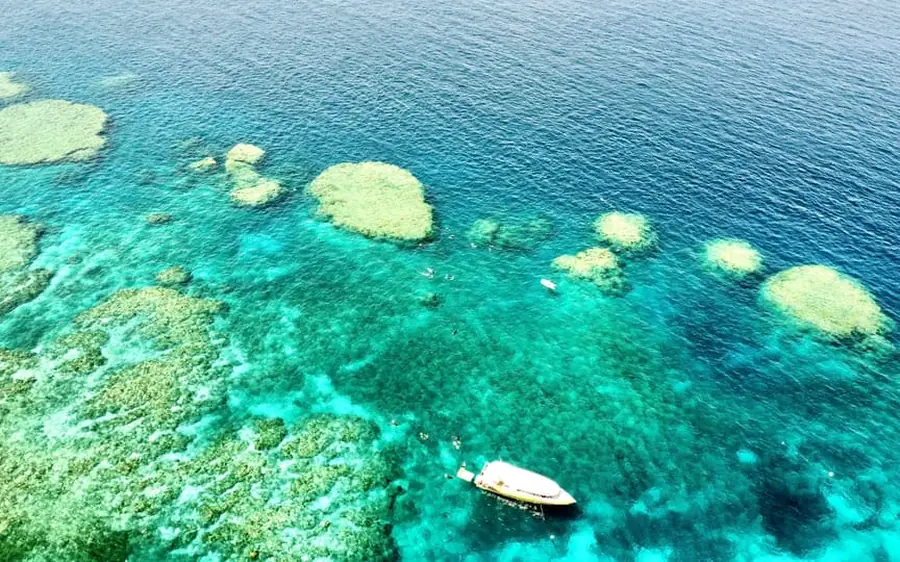
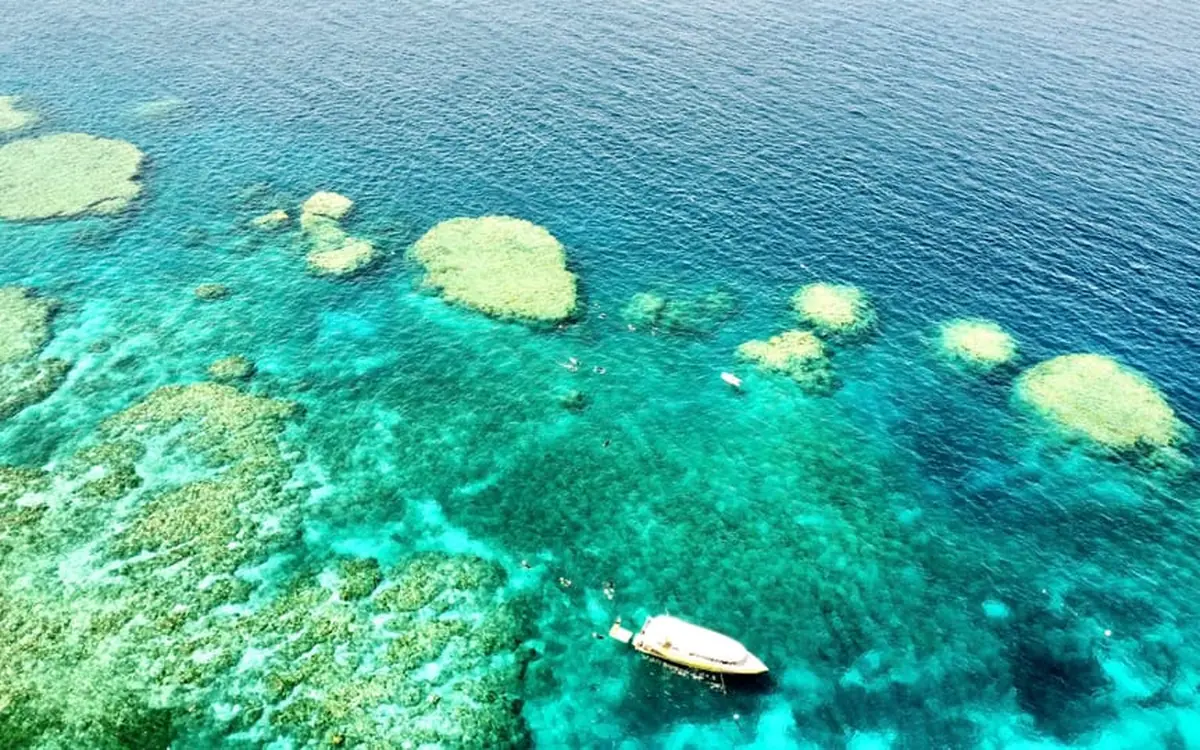
The Great Barrier Reef is not one wall of coral out at sea. It is a system of some three thousand reefs along two thousand kilometres, and in the Whitsundays it comes in two forms. The outer reef is the line of platform reefs on the edge of the continental shelf, sixty to seventy kilometres east of Airlie Beach: Hardy Reef, Bait Reef, Hook Reef. The fringing reef is the coral that grows around the islands themselves, in the bays on the northern side of Hook Island and around Langford, Hayman and Border Island, an hour from the marina.
Both are inside the Great Barrier Reef Marine Park and both are the reef. The difference is water. The outer reef sits in open ocean and the visibility is routinely twenty metres; the fringing reef sits in the lee of the islands, where the water is calmer and warmer but carries more sediment after wind, so visibility runs from eight to fifteen metres on a good day. The coral at both is healthy where the boats moor, because the moorings are fixed and the operators choose the sites.
What the fringing reef has that the outer reef lacks is shelter and turtles. Blue Pearl Bay on Hayman Island and Mantaray Bay on Hook Island are calm on almost every day of the year, and green turtles feed on the seagrass beside the coral. What the outer reef has is scale: coral walls dropping away into blue, and the big fish that come with them.
The fringing reef days
Two stops on the raft boat; two mornings on the yachts.
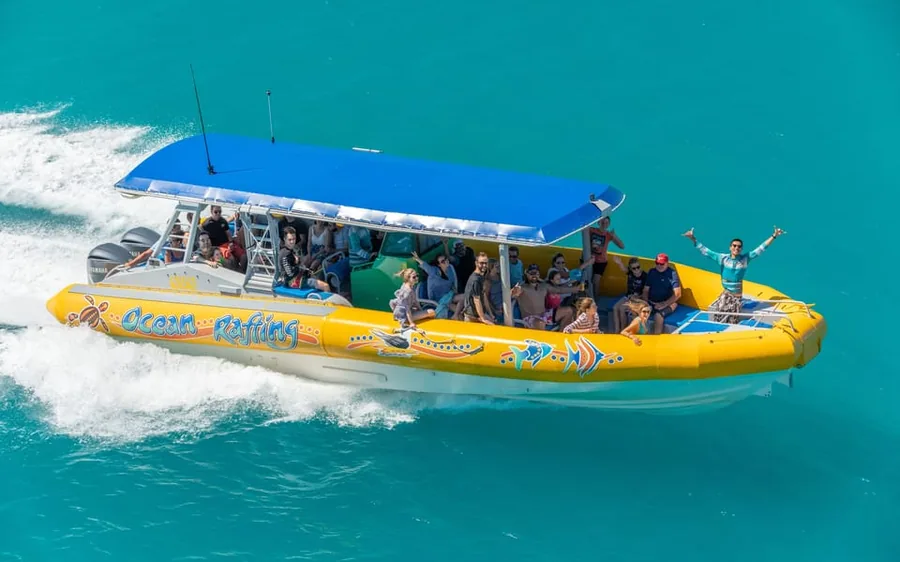
Every Whitsundays boat tour on this page that stops to snorkel does so at the fringing reef, because it sits on the way to Whitehaven Beach. The raft boat at $177 makes two stops, usually at Mantaray Bay and Luncheon Bay on Hook Island, and pairs them with the Hill Inlet lookout; it is the best-evidenced reef day here, with 2,400 reviews at 4.8. The eco-cruise at $178 makes one stop on the way home from the beach. The two cheapest days, $170 and $170, are built around the beach, with the first adding a snorkel.
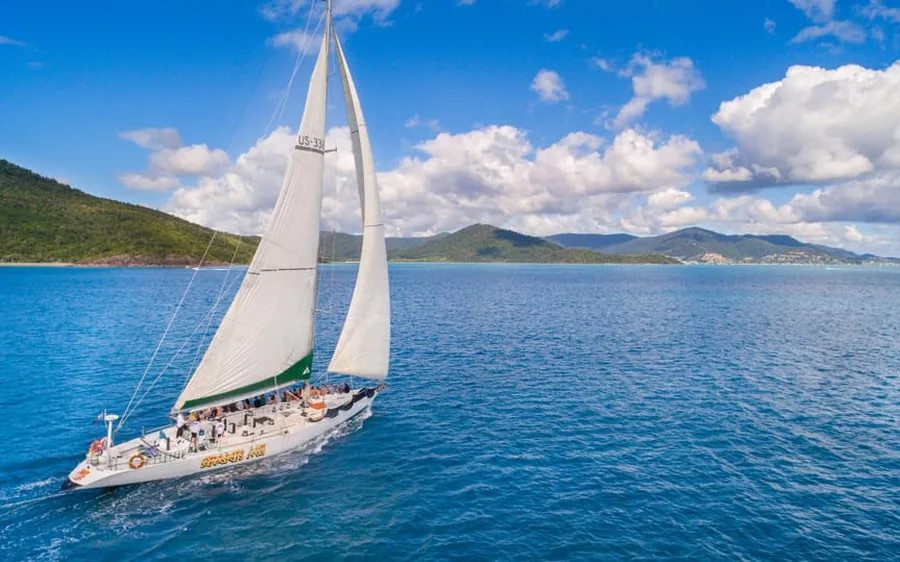
The overnight yachts do the fringing reef properly. Two nights at anchor means two or three snorkel sessions rather than one, and at different bays: our top pick at $372 snorkels on the way out and again on the second morning, and the two-night sails at $424 and $497 do the same. On a yacht you are in the water at eight in the morning when the bay is glass and the turtles are up.
Snorkel gear and, from October to May, a stinger suit come with every boat. The crew brief you on the site, mark the edge with a buoy and keep a lookout in the tender. You need to be able to swim; you do not need to have snorkelled before.
Book direct
The best fringing-reef day, the outer reef pontoon, our top pick with two snorkels, and the one that does reef and beach in a day.
★ 4.8 · 2,400 reviews
★ 4.6 · 366 reviews
★ 4.7 · 560 reviews
★ 4.7 · 341 reviews
The outer reef
Clearest water, biggest coral, longest crossing.
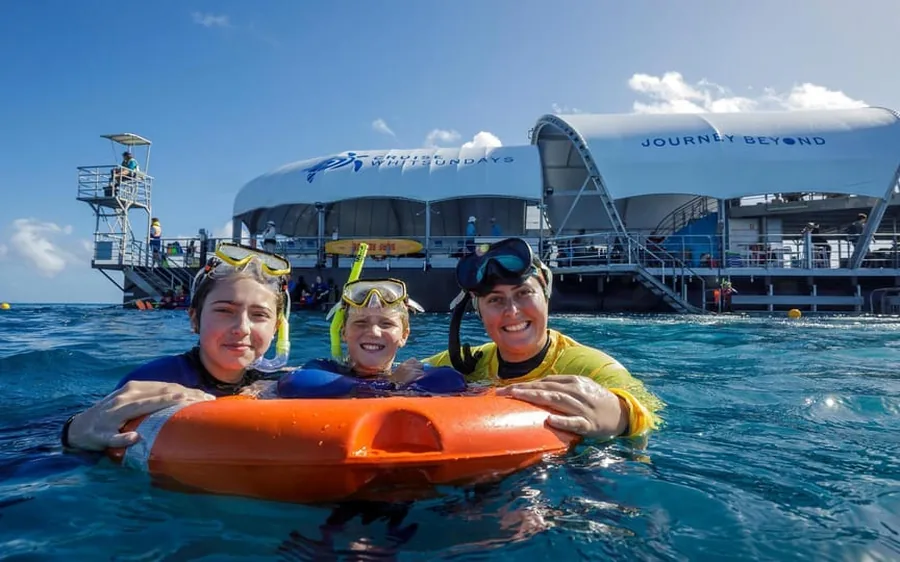
The outer reef day at $234 is a different kind of day. A large fast catamaran leaves Port of Airlie in the morning and runs about three hours east to Reefworld, a permanent pontoon moored on the edge of Hardy Reef. From the pontoon you snorkel over the reef wall with the current pushing you gently along it, ride a semi-submarine along the coral for people who prefer to stay dry, eat lunch on the deck and go back in. There is an underwater observatory below the pontoon and the fish know where the food is. Then three hours home.
It is the clearest water on this page and the biggest coral. It is also six hours on a boat for about three on the reef, and the crossing can roll in a fresh trade wind. Book it for the pontoon, the observatory and the scale of the outer reef, all of which are worth the day; the fish and the turtles are also an hour from the marina at Hook Island.
Two other listings reach the outer reef. The fast jetboat day at $237 snorkels the outer reef in the morning and lands on Whitehaven Beach in the afternoon, which is the only way to do both in one day; 341 reviews at 4.7. The two-night sail at $379 is the only overnight boat that goes out there, with 36 reviews so far.
What you see in the water
From the operators’ own site briefings and the reviews.
On the seagrass at Blue Pearl Bay and Mantaray Bay, most mornings. The fringing reef is the place for them; the overnight yachts see the most.
A resident at Mantaray Bay, a metre long and used to snorkellers. Also at the pontoon on Hardy Reef, where he has a name.
Everywhere the boats moor. The reef fish are the reason the water looks busy in the photographs.
Bommies, freestanding coral towers, at the fringing reef; a long wall dropping into blue at the outer reef.
At Whitehaven and in the shallows at Tongue Bay, seen from the surface without a mask.
Humpbacks pass through the islands from July to September, and the crossing to the outer reef is where the day boats see them most.
Two nights at anchor, snorkels on two mornings at the fringing reef, Whitehaven Beach and the lookout at dawn, every meal on board.
Check dates for our top pick→Cairns or Airlie Beach
Cairns for the outer reef alone; Airlie for the reef with everything else.
People ask whether the Great Barrier Reef is better from Cairns or from Airlie Beach, and the honest answer is that they are different trips to the same reef. From Cairns the outer reef is closer, ninety minutes rather than three hours, and the day boats are built around it; the islands near Cairns are few. From Airlie Beach the outer reef is further but the seventy-four islands are on the doorstep, with the fringing reef in their bays and Whitehaven Beach among them, so a Whitsundays boat tour gives you reef and beach and sailing in one trip, and a night at anchor if you want one.
If the reef alone is the reason for the trip, Cairns is the shorter road to the outer reef. If the reef is one part of it, with the beach, the lookout and a yacht under sail, the Whitsundays are the better base, and the fringing reef an hour out is the same coral system with turtles in calmer water. Most people who do both say the Whitsundays were the holiday and the reef was the day.
Common questions
Yes. The fringing reef at Hook and Langford Islands is an hour away and every snorkelling day here reaches it. The outer reef at Hardy Reef is three hours east, on $234.
Yes. It is coral of the same system growing around the islands, inside the Great Barrier Reef Marine Park, with the same turtles and reef fish.
For the fringing reef, the raft boat at $177 with two sites and 2,400 reviews. For the outer reef, the pontoon day at $234. For the most time in the water, our top pick at $372 over two nights.
For the pontoon, the semi-submarine and twenty-metre visibility, yes. For coral and fish alone, the fringing reef is an hour away on every snorkelling day.
No. The crews brief everyone, hand out gear and stinger suits, and watch from the tender. You need to be able to swim.
The fringing reef and the beach, yes, on most day cruises. The outer reef and the beach in one day is the jetboat at $237.
Closer to the outer reef, yes. Airlie Beach adds the islands, the beach and the sailing, with the fringing reef an hour away.
In short
An hour for turtles, three hours for the wall.
$177. Two fringing-reef sites and the Hill Inlet lookout from a raft boat, 2,400 reviews at 4.8. The best-evidenced reef day here.
$234. The outer reef at Hardy Reef: pontoon, semi-submarine, observatory, lunch on the platform. The clearest water on the page.
$372. Our top pick. Two nights, two or three snorkels at different bays, the beach and the lookout at dawn.
The reef is an hour away and three hours away, and both are the reef. Choose by how much water you want and how far you want to go, and book a few weeks ahead in the dry season when the visibility is best.
Go deeper
Seventeen fares compared, cost per hour on the water, and the charges that are not in the headline price.
VerdictSeventeen ranked for one decision, with a straight answer for each kind of visitor.
2 days, 1 nightWhat a 2-day, 1-night sailing trip actually does hour by hour, and which boats do it.
2 and 3 nightsThe longer trips: what two nights add, the maxi yachts, and the one that reaches the outer reef.
Whitehaven BeachSeven kilometres of silica sand, how long each boat stays, and how to reach it from Airlie Beach.
Hill InletThe swirling sands at the top of Whitehaven, the walk to the lookout, and which tours include it.